Saturday, the 18th of 2026, 10:00 AM – 1:00 PM CET
Exploring Sustainability, AI, and Global Responsibility through Interdisciplinary Research with Prof. Ernst Pöppel and Dr. Maria Reinisch

We live in a world shaped by environmental crises, global socio-ecological challenges, and the rapid advances in artificial intelligence. This webinar explores how dominant environmental approaches can be rethought, what kinds of transformations are necessary to enable a meaningful ecological shift, and how artificial intelligence may contribute to more sustainable solutions.
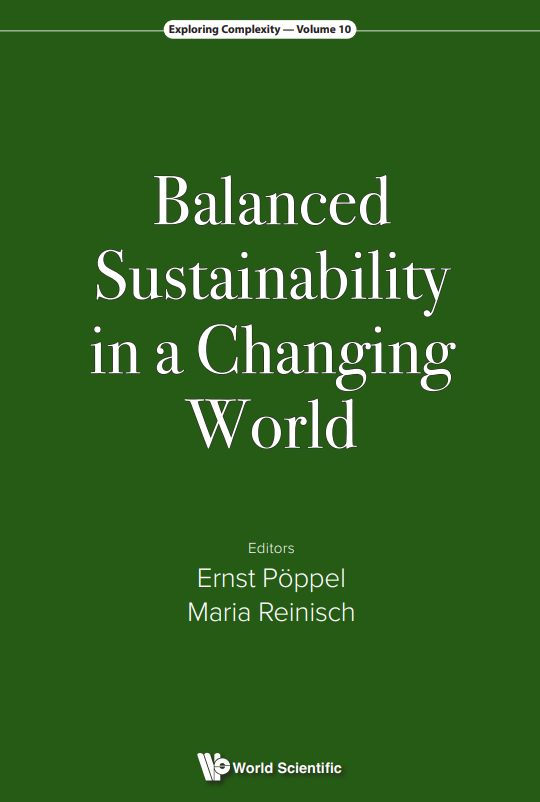
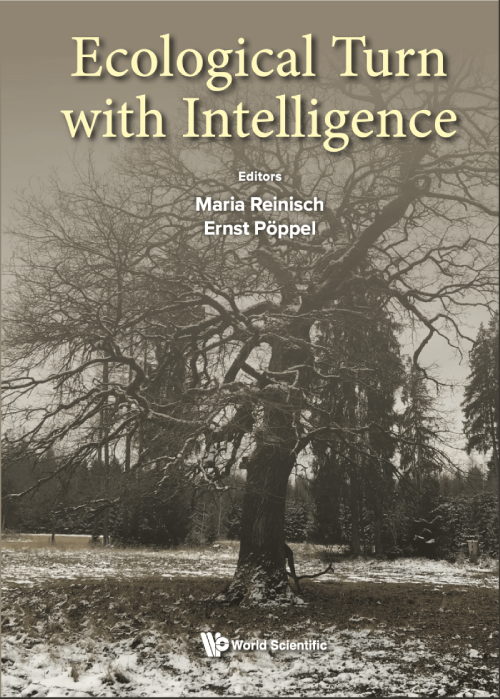
Join editors Prof. Dr. Ernst Pöppel and Dr. Maria Reinisch, as they present insights form the books Balanced Sustainability in a Changing World and Ecological Turn with Intelligence. The session will offer a series of thought-provoking online presentations and fresh perspectives on these pressing issues.
The two books are based on interdisciplinary Autumn and Winter Schools where emerging scholars explored global sustainability challenges and ecological responsibility.
The upcoming webinar features seven presentations by international young scientists who are members of Young VDW (Young Visions Determine/Define Worlds). Each presentation will highlight a contribution to one of the two books and address our connection with nature by considering diverse cultural insights and traditional knowledge, alongside the societal and psychological changes needed for lasting ecological transformation. They will also investigate the effects of artificial intelligence on the environment and how it can be harnessed to promote sustainability, guide responsible innovation, and shape a more balanced relationship between technology and the natural world.
Agenda
Balanced Sustainability in a Changing World:
- 10:20 Elvira Barkhatova – Urban nature(s): Conceptualization and interculturality
- 10:40 Philipp Geyer – Rethinking of structural, scientific, and spiritual solutions for our relationship with the environment based on indigenous knowledge
- 11:00 Matteo Sesia – Psychosocial and cultural aspects of an ecological turn
Ecological Turn with Intelligence
- 11:40 Zhang Dongxue – The environmental impact of AI, in their own words
- 12:00 Zhao Chen – Strengthening global citizenship could enhance ecological responsibility with the approach of global education
- 12:20 Gu Yu – Building eco-conscious personal AI assistants
- 12:40 Vzorin – Artificial Intelligence as a new ecological niche for
This event is held by the Federation of German Scientists (VDW) and the Institute of Medical Psychology (IMP), LMU Munich, Germany. Support is provided by the ULP in Taiwan. Please note the additional information: the two books were published by World Scientific, Singapore, in the series “Exploring Complexity”.
We look forward to welcoming you!
We kindly encourage you to register under event@vdw-ev.de for the event. Alternatively, you may join directly via Zoom using the link below:
https://lmu-munich.zoom-x.de/j/61718474510?pwd=qbyLrpNYAabsIXTFRwCF2o9zPzMbkj.1
Meeting-ID: 617 1847 4510
Kenncode: 786331
Hosts